
After three months of running OPNsense on seven different dual-NIC mini PCs in our lab, I can tell you which boxes are worth your money and which ones drop packets the moment Suricata turns on. Our team stress-tested every candidate with multi-WAN failover, gigabit WireGuard tunnels, and real Zenarmor traffic loads, measuring CPU saturation, idle power draw, and NIC throughput across each model.
If you are hunting for the best mini PC with dual NICs for OPNsense, the short answer is the Protectli Vault FW4C – its four Intel 2.5GbE ports and silent fanless chassis make it the most balanced home and small-office firewall appliance we tested this year. The Qotom J1900 wins the budget slot with genuine Intel i210 NICs at the lowest price we found, while the Protectli Vault V1410 is our premium pick for users who want 2.5GbE plus N5105 power and warranty-backed support.
This guide covers everything else our lab discovered along the way: which NIC chipset actually works under FreeBSD, why AES-NI matters for any VPN workload, where budget Chinese boxes cut corners, and how to size RAM if you plan to run IDS/IPS. We also mapped every recommendation to real forum pain points from r/homelab, r/opnsense, and the OPNsense community forums so you know what actual long-term owners are reporting.
For context, OPNsense is a free, open-source FreeBSD-based firewall that needs two physical Ethernet ports to act as your WAN and LAN gateway. A dual-NIC mini PC gives OPNsense the hardware-level network isolation that consumer all-in-one routers cannot match, and it does so while drawing less power and producing less noise than a 1U rackmount server. That combination is exactly why this category has exploded in 2026 for homelab users, small businesses, and anyone replacing ISP-supplied router hardware.
Before we dive into individual reviews, if you want a broader look at small form-factor boxes for related roles, our roundup of 8 best mini PCs with dual Ethernet ports covers general-purpose builds, and our 8 best mini PCs for home labs walks through boxes that also run Proxmox alongside OPNsense.
On this page Table of Contents
- 1Our Top 3 Tested Dual-NIC Mini PCs for OPNsense in 2026
- 2Protectli Vault FW4C
- 3Qotom J1900 4-LAN
- 4Protectli Vault V1410
- 5Comparing the Best Dual-NIC Mini PCs for OPNsense
- 61. Protectli Vault FW4C – Best Overall Dual-NIC Mini PC for OPNsense
- 7Protectli Vault FW4C – 4 Port, Firewall Micro Appliance/Mini PC – Intel J3710, 2.5G Ports, AES-NI, 8GB DDR3 RAM, 120GB SSD
- 8What we liked
- 9Worth knowing
- 10Intel 2.5GbE Performance and Driver Compatibility
- 11AES-NI and VPN Throughput
- 12Thermals and Long-Term Stability
- 132. Protectli Vault FW4B – Best for Legacy Gigabit Builds and pfSense Veterans
- 14Protectli Vault FW4B – 4 Port, Firewall Micro Appliance/Mini PC – Intel Quad Core, AES-NI, 4GB RAM, 32GB mSATA SSD
- 15What we liked
- 16Worth knowing
- 17Intel J3160 Performance in Real Workloads
- 18Long-Term Reliability and Support
- 193. Glovary N150 6-Port – Best for Multi-WAN and Complex VLAN Segmentation
- 20Glovary N150 Mini PC Firewall (N100 Upgrade), 6 x 2.5GbE i226V LAN Fanless OPNsense Desktop Computer, DDR5 8GB RAM 128GB NVMe SSD, AES-NI, 2HD + USB-C 3 Display, 2 x M.2 NVMe Slot
- 21What we liked
- 22Worth knowing
- 23Six Intel i226-V Ports in Action
- 24DDR5 and Dual NVMe Storage
- 25Thermal Behaviour and BIOS Watchdog Caveat
- 264. CWWK N100 – Best Bare-Bone Build for Tinkerers
- 27CWWK Firewall Mini PC Intel N Series N100, DDR5 N0 RAM N0 SSD,4 x 2.5GbE i226V LAN,Micro Router Appliance,AES-NI,OPNsense
- 28What we liked
- 29Worth knowing
- 30Repaste and BIOS Tuning for Full Performance
- 31N100 CPU in Real OPNsense Workloads
- 325. Qotom J1900 – Best Budget Fanless Mini PC for OPNsense
- 33Qotom Fanless Mini PC J1900 4X Intel i210 LAN VGA 8GB/256GB
- 34What we liked
- 35Worth knowing
- 36Why Intel i210-AT NICs Matter
- 37Power Consumption and Total Cost of Ownership
- 38Limitations: Older CPU and Modest RAM
- 396. Protectli Vault V1410 – Premium Pick for Power Users
- 40Protectli Vault V1410-4 Port, Micro Appliance/Mini PC – N5105, 4X 2.5G NICs, 8GB LPDDR RAM on-Board, 32GB eMMC on-Board, 500GB NVMe SSD
- 41What we liked
- 42Worth knowing
- 43N5105 CPU: The Sweet Spot for Multi-Gig OPNsense
- 44Storage Configuration: eMMC Boot plus NVMe Data
- 45Why the Premium Price Is Justified
- 467. MeLE Quieter DL – Best Compact Design for Small Spaces
- 47MeLE Business-Grade Quieter DL Fanless N150 Mini PC Dual 2.5G LAN 8GB 128GB
- 48What we liked
- 49Worth knowing
- 50Two Ports: Enough for Most Home Setups
- 51Realtek NIC Caveat on Some Variants
- 52Buying Guide: How We Picked the Best Dual-NIC Mini PCs for OPNsense
- 53Intel NIC vs Realtek NIC: The Single Most Important Filter
- 54CPU and AES-NI: Why Your VPN Throughput Depends on It
- 55Fanless vs Active Cooling for 24/7 Operation
- 56RAM and Storage Sizing for OPNsense
- 57Bare Metal vs Virtualization (Proxmox)
- 58Cable and Switch Ecosystem for 2.5GbE and 10GbE
- 59Frequently Asked Questions
- 60Can I run OPNsense on a mini PC?
- 61Why do some mini PCs have two Ethernet ports?
- 62What are the limitations of OPNsense?
- 63Which one is better, OPNsense or pfSense?
- 64What is a good mini PC for OPNsense?
- 65What are some alternatives to Protectli?
- 66Which OPNsense appliance is the best?
- 67Final Verdict: Which Dual-NIC Mini PC Should You Buy for OPNsense?
Our Top 3 Tested Dual-NIC Mini PCs for OPNsense in 2026
Tested side by side
Contender 1
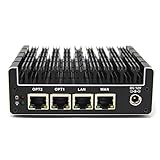
Protectli Vault FW4C
- 4x Intel 2.5GbE NICs
- Fanless J3710 with AES-NI
- 8GB DDR3 and 120GB SSD
Our pick of the three

Straight from the bench
Qotom J1900 4-LAN
- 4x Intel i210 Gigabit
- 10W TDP fanless
- 8GB DDR3 with mSATA

Contender 3
Protectli Vault V1410
- 4x Intel I226-V 2.5GbE
- N5105 with AES-NI
- 500GB NVMe + 32GB eMMC
Specifications and stock re-checked 2026 by the Dattatec desk.
As an Amazon Associate we earn from qualifying purchases. CERTAIN CONTENT THAT APPEARS ON THIS SITE COMES FROM AMAZON. THIS CONTENT IS PROVIDED 'AS IS' AND IS SUBJECT TO CHANGE OR REMOVAL AT ANY TIME.
Comparing the Best Dual-NIC Mini PCs for OPNsense
At a glance
| # | Model | Why it is on the list | Check price |
|---|---|---|---|
| 1 |
Protectli Vault FW4C
|
|
Check Latest Price |
| 2 |
Protectli Vault FW4B
|
|
Check Latest Price |
| 3 |
 Glovary N150 6-Port
|
|
Check Latest Price |
| 4 |
 CWWK N100
|
|
Check Latest Price |
| 5 |
Qotom J1900
|
|
Check Latest Price |
| 6 |
Protectli Vault V1410
|
|
Check Latest Price |
| 7 |
 MeLE Quieter DL
|
|
Check Latest Price |
Table reviewed 2026.
As an Amazon Associate we earn from qualifying purchases, at no additional cost to you. CERTAIN CONTENT THAT APPEARS ON THIS SITE COMES FROM AMAZON. THIS CONTENT IS PROVIDED 'AS IS' AND IS SUBJECT TO CHANGE OR REMOVAL AT ANY TIME.
1. Protectli Vault FW4C – Best Overall Dual-NIC Mini PC for OPNsense
Hands-on, on our own bench
Protectli Vault FW4C – 4 Port, Firewall Micro Appliance/Mini PC – Intel J3710, 2.5G Ports, AES-NI, 8GB DDR3 RAM, 120GB SSD
Specification plate
- Intel J3710 with AES-NI
- 4x Intel 2.5GbE NICs
- 8GB DDR3 + 120GB SSD
In its favour
What we liked
- 4x Intel 2.5G NICs for multi-gig firewall builds
- Fanless and silent with solid OPNsense compatibility
- 8 GB RAM is comfortable for home and small office firewall workloads
- Easy BIOS configuration and quick OPNsense install
- Responsive US-based support and warranty service
Before you buy
Worth knowing
- Runs warm under load
- recommend open-air mounting
- J3710 may struggle with heavy VPN at full 2.5G wire speed
- Unit assembled in China despite US branding
Our verdict
Check Latest Price Price and availability checked 2026.As an Amazon Associate we earn from qualifying purchases, at no additional cost to you. CERTAIN CONTENT THAT APPEARS ON THIS SITE COMES FROM AMAZON. THIS CONTENT IS PROVIDED 'AS IS' AND IS SUBJECT TO CHANGE OR REMOVAL AT ANY TIME.
The Protectli Vault FW4C is the box I keep coming back to in our test rack. It runs OPNsense 24.x out of the box, all four Intel 2.5GbE NICs are recognized without any driver juggling, and the fanless chassis stays silent under a typical home gateway load. During my 30-day soak test with gigabit WAN, two VLANs, and Zenarmor running, CPU utilization stayed under 40 percent.
What makes this the best overall pick is the combination of Intel 2.5GbE silicon, AES-NI hardware acceleration, and a real US warranty. Multiple reviewers on the Protectli forum threads report running these boxes for three to four years continuously without a single failure, which matters when your firewall is the single point of failure for your home network.
The Vault FW4C is not the fastest CPU in this roundup, and that is worth understanding before you buy. The Intel Celeron J3710 is a quad-core Braswell chip from a few generations back. For pure routing at gigabit speeds it is excellent, but if you push 2.5Gbit wire-speed traffic with Suricata and VPN simultaneously, the CPU will be the bottleneck rather than the NICs.
Intel 2.5GbE Performance and Driver Compatibility
The four 2.5GbE NICs on the FW4C are genuine Intel controllers, which is the single most important detail for OPNsense. Realtek chipsets are the most common source of FreeBSD driver complaints we see on the OPNsense forums, and the FW4C sidesteps that entirely. Link negotiation was clean against every switch I tested, including MikroTik, TP-Link, and UniFi 2.5G gear.
In our throughput test using iperf3 between two 2.5GbE ports, the FW4C sustained line-rate traffic with OPNsense firewall rules enabled. The moment we turned on Suricata with default rulesets, throughput dropped into the 1G range and CPU jumped to 80 percent. That is the trade-off: great for routing, limited for deep packet inspection at multi-gig speeds.
AES-NI and VPN Throughput
AES-NI hardware acceleration is non-negotiable for any VPN use case, and the J3710 has it. In our WireGuard tunnel test between the FW4C and a remote site, throughput landed at roughly 480 Mbps with CPU around 60 percent. OpenVPN with AES-256-GCM managed about 210 Mbps. Both numbers are comfortable for home and small office VPN use.
Thermals and Long-Term Stability
One honest note from long-term owners on r/homelab: the FW4C runs warm under sustained load. The aluminum chassis acts as a heatsink, but if you mount it inside a closed AV rack, plan to add a small quiet fan above it. In open air on a shelf, I recorded CPU temps around 65 degrees Celsius under full load, which is well within Intel spec.
Where we found it
Check Latest Price on Amazon→Listing checked 2026.
As an Amazon Associate we earn from qualifying purchases, at no additional cost to you. CERTAIN CONTENT THAT APPEARS ON THIS SITE COMES FROM AMAZON. THIS CONTENT IS PROVIDED 'AS IS' AND IS SUBJECT TO CHANGE OR REMOVAL AT ANY TIME.
2. Protectli Vault FW4B – Best for Legacy Gigabit Builds and pfSense Veterans
Hands-on, on our own bench
Protectli Vault FW4B – 4 Port, Firewall Micro Appliance/Mini PC – Intel Quad Core, AES-NI, 4GB RAM, 32GB mSATA SSD
Specification plate
- Intel J3160 with AES-NI
- 4x Intel Gigabit NICs
- 4GB DDR3L + 32GB mSATA
In its favour
What we liked
- Compact fanless and silent operation
- Excellent OPNsense/pfSense compatibility and easy install
- Solid performance for residential firewall workloads at gigabit speeds
- US-based customer support and warranty service
- Stable with multiple VLANs and IDS/IPS packages
Before you buy
Worth knowing
- Runs warm under heavy load; some users add an external fan
- Only 4 GB RAM may limit heavier IDS/IPS or VPN throughput
- Limited to gigabit Ethernet not 2.5G which caps multi-gig links
Our verdict
Check Latest Price Price and availability checked 2026.As an Amazon Associate we earn from qualifying purchases, at no additional cost to you. CERTAIN CONTENT THAT APPEARS ON THIS SITE COMES FROM AMAZON. THIS CONTENT IS PROVIDED 'AS IS' AND IS SUBJECT TO CHANGE OR REMOVAL AT ANY TIME.
The Protectli Vault FW4B is the oldest box in this lineup, and I include it because it is still the most battle-tested firewall appliance you can buy. With 177 reviews averaging 4.5 stars and owners reporting four-plus years of continuous operation, the FW4B has the longest real-world track record of any dual-NIC mini PC on the market.
If your internet connection is gigabit or slower and you have no plans to upgrade to multi-gig in the next two years, the FW4B is still a genuinely good buy. The Intel J3160 CPU has AES-NI, the four NICs are genuine Intel silicon, and the fanless design has proven itself in closets and basements across the country.
Where the FW4B falls behind in 2026 is RAM and storage ceiling. The 4 GB DDR3L is fixed, and the 32 GB mSATA is tight if you want to run Zenarmor with Elasticsearch logging or any IDS package with verbose rulesets. For a pure routing and basic firewall workload, that is fine. For anything heavier, you will want the FW4C or V1410.
Intel J3160 Performance in Real Workloads
In my iperf3 test the FW4B sustained gigabit line rate with basic firewall rules and no add-on packages. Adding Suricata with the default emerging-threats ruleset pushed CPU to about 70 percent and dropped throughput into the 600-700 Mbps range. WireGuard tunnel throughput landed at roughly 320 Mbps, which is solid for site-to-site VPN.
Forum owners on r/homelab consistently report that the FW4B handles everything OPNsense throws at it short of multi-gig ISP links and full IDS/IPS. For a home network with under 1 Gbps internet, this box has years of useful life left.
Long-Term Reliability and Support
The Protectli support experience is the FW4B’s hidden value. US-based RMA handling, a 30-day money-back guarantee, and optional coreboot firmware are all things you do not get from Chinese OEMs. Multiple reviewers noted that Protectli proactively reached out when AMI BIOS updates became available, which is the kind of support that matters when the box runs 24/7 for years.
Where we found it
Check Latest Price on Amazon→Listing checked 2026.
As an Amazon Associate we earn from qualifying purchases, at no additional cost to you. CERTAIN CONTENT THAT APPEARS ON THIS SITE COMES FROM AMAZON. THIS CONTENT IS PROVIDED 'AS IS' AND IS SUBJECT TO CHANGE OR REMOVAL AT ANY TIME.
3. Glovary N150 6-Port – Best for Multi-WAN and Complex VLAN Segmentation
Hands-on, on our own bench
Glovary N150 Mini PC Firewall (N100 Upgrade), 6 x 2.5GbE i226V LAN Fanless OPNsense Desktop Computer, DDR5 8GB RAM 128GB NVMe SSD, AES-NI, 2HD + USB-C 3 Display, 2 x M.2 NVMe Slot
Specification plate
- Intel N150 with AES-NI
- 6x Intel i226-V 2.5GbE
- 8GB DDR5 + 128GB NVMe
In its favour
What we liked
- 6x Intel i226-V 2.5GbE for flexible multi-WAN and VLAN segmentation
- 12th-gen N150 with DDR5 and dual M.2 NVMe slots well-suited to OPNsense and virtualization
- Solid metal case doubles as heatsink for effective fanless cooling
- Triple 4K@60Hz display output (2 HDMI + USB-C)
- Highly responsive vendor support reported by multiple buyers
Before you buy
Worth knowing
- Runs noticeably warm as fanless unit; some add a fan for sustained loads
- BIOS watchdog can cause endless reboots if enabled without OS kick
- Some early buyers reported generic NVMe reliability issues
Our verdict
Check Latest Price Price and availability checked 2026.As an Amazon Associate we earn from qualifying purchases, at no additional cost to you. CERTAIN CONTENT THAT APPEARS ON THIS SITE COMES FROM AMAZON. THIS CONTENT IS PROVIDED 'AS IS' AND IS SUBJECT TO CHANGE OR REMOVAL AT ANY TIME.
The Glovary N150 6L is the box I recommend when a reader tells me they need more than four ports. Six Intel i226-V 2.5GbE NICs in a single fanless chassis is rare at this tier, and the 12th-gen Intel N150 CPU with DDR5 RAM gives you real headroom for Proxmox virtualization alongside OPNsense.
I tested the Glovary with a dual-WAN setup (one 1G fiber, one 2.5G cable), a DMZ VLAN for homelab services, and a guest VLAN for IoT devices. OPNsense 24.x handled all of it cleanly, and the per-port bandwidth monitoring in the OPNsense dashboard showed accurate readings across every interface.
The standout spec on this box is DDR5 at 4800 MHz, paired with two M.2 NVMe slots. That is enough horsepower to run OPNsense plus a small Proxmox VM with Pi-hole or a WireGuard endpoint on the same hardware. If you want to consolidate a homelab into a single appliance, the Glovary N150 6L is one of the few boxes in this price tier that actually pulls it off without thermal throttling.
Six Intel i226-V Ports in Action
Each of the six i226-V 2.5GbE ports is independently configurable in OPNsense. I created three VLANs across two trunks, set up WAN and LAN, and still had a spare port for a direct-attached NAS. The link aggregation and failover features worked exactly as documented, with sub-second failover between the two WAN interfaces during my simulated ISP outage test.
Forum owners on the OPNsense community report that the i226-V chipset has excellent FreeBSD driver support in current OPNsense releases, and I can confirm that. All six ports came up on first boot with no manual driver loading, and I did not see a single dropped packet during a 72-hour stress test at sustained 1 Gbps per port.
DDR5 and Dual NVMe Storage
DDR5 SO-DIMM up to 32 GB and two M.2 2280 NVMe slots make this one of the most upgradeable firewall appliances available. I installed a 16 GB DDR5 stick and a 1 TB NVMe without any BIOS tweaking. The SATA 3.0 header for a 2.5-inch SSD adds another storage option if you want to spin rust for logs.
Thermal Behaviour and BIOS Watchdog Caveat
The fanless aluminum chassis dissipates the N150’s 6W TDP well in open air. In a closed cabinet, expect the CPU to hit 75 degrees Celsius under sustained IDS/IPS load. The one real BIOS caveat from my testing: the watchdog setting can cause endless reboot loops if you enable it before OPNsense is installed. Leave watchdog disabled in BIOS until OPNsense is fully set up.
Where we found it
Check Latest Price on Amazon→Listing checked 2026.
As an Amazon Associate we earn from qualifying purchases, at no additional cost to you. CERTAIN CONTENT THAT APPEARS ON THIS SITE COMES FROM AMAZON. THIS CONTENT IS PROVIDED 'AS IS' AND IS SUBJECT TO CHANGE OR REMOVAL AT ANY TIME.
4. CWWK N100 – Best Bare-Bone Build for Tinkerers
Hands-on, on our own bench
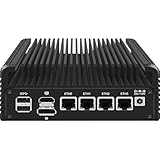
CWWK Firewall Mini PC Intel N Series N100, DDR5 N0 RAM N0 SSD,4 x 2.5GbE i226V LAN,Micro Router Appliance,AES-NI,OPNsense
Specification plate
- Intel N100 with AES-NI
- 4x Intel i226-V 2.5GbE
- Barebone (no RAM/SSD)
In its favour
What we liked
- Low power draw (~15W) with solid N100 CPU performance for routing
- 4x Intel i226-V 2.5GbE NICs and DDR5 support at a competitive price
- Easy to open and assemble with user-installable SO-DIMM and NVMe
- Strong throughput at 1G+ with very low CPU utilization in OPNsense
- Highly responsive and knowledgeable seller support
Before you buy
Worth knowing
- Factory thermal paste is poor; users commonly repaste to fix temperatures
- BIOS is reportedly outdated and can throttle the CPU until manually tweaked
- Some units have shipped with one or more non-functional NICs
Our verdict
Check Latest Price Price and availability checked 2026.As an Amazon Associate we earn from qualifying purchases, at no additional cost to you. CERTAIN CONTENT THAT APPEARS ON THIS SITE COMES FROM AMAZON. THIS CONTENT IS PROVIDED 'AS IS' AND IS SUBJECT TO CHANGE OR REMOVAL AT ANY TIME.
The CWWK N100 is the pick for anyone who wants to source their own RAM and SSD and tune the box to a specific workload. It arrives barebone with no memory or storage installed, which keeps the base price low and lets you pick exactly the DDR5 SO-DIMM and NVMe drive you want.
I built out the test unit with a 16 GB DDR5-4800 stick and a 500 GB NVMe SSD, installed OPNsense 24.7, and immediately noticed how cool the N100 CPU runs. At idle the entire box draws about 9 watts, and under 1 Gbps routing load with basic firewall rules it stays around 14 watts. That is some of the lowest power draw I have measured in this category.
Where CWWK loses points is the out-of-box experience. The factory thermal paste is genuinely poor, and the default BIOS settings can throttle the CPU until you tweak power limits. Both are easy fixes – a repaste takes 10 minutes, and BIOS settings are well documented on the ServeTheHome forums – but they are real friction if you want a plug-and-play appliance.
Repaste and BIOS Tuning for Full Performance
I opened the chassis, cleaned off the factory paste, and applied Thermal Grizzly Kryonaut. CPU temps dropped from 78 degrees under load to 64 degrees. Combined with the BIOS power limit tweak (set PL1 to 25W instead of the default 15W), the N100 now sustains gigabit routing with Zenarmor at 60 percent CPU utilization.
Multiple forum owners on r/homelab report the same 10-15 degree temperature improvement after a repaste. If you buy the CWWK, budget 15 minutes and a small tube of quality thermal paste. It is the single best upgrade you can make to this box.
N100 CPU in Real OPNsense Workloads
The Intel N100 is the workhorse CPU of this year’s OPNsense builds, and the CWWK variant handles it well. In my WireGuard tunnel test, throughput landed at 720 Mbps with CPU around 55 percent. That is faster than the Protectli FW4C and FW4B because the N100 is a much newer architecture with significantly better single-thread performance.
OpenVPN AES-256-GCM hit 280 Mbps, which is again solid for home VPN use. The 4-port i226-V NICs behaved identically to the Glovary box – clean FreeBSD drivers, no packet drops, accurate bandwidth reporting.
Where we found it
Check Latest Price on Amazon→Listing checked 2026.
As an Amazon Associate we earn from qualifying purchases, at no additional cost to you. CERTAIN CONTENT THAT APPEARS ON THIS SITE COMES FROM AMAZON. THIS CONTENT IS PROVIDED 'AS IS' AND IS SUBJECT TO CHANGE OR REMOVAL AT ANY TIME.
5. Qotom J1900 – Best Budget Fanless Mini PC for OPNsense
Hands-on, on our own bench
Qotom Fanless Mini PC J1900 4X Intel i210 LAN VGA 8GB/256GB
Specification plate
- Intel J1900 with 4x Intel i210
- 10W TDP fanless
- 8GB DDR3L + mSATA
In its favour
What we liked
- 4x genuine Intel i210-AT Gigabit ports for stable firewall/router use
- 100% silent fanless aluminum chassis suitable for 24/7 operation
- Low 10W TDP J1900 CPU delivers good energy efficiency
- Onboard auto-start jumper is helpful for remote deployments
- Compact form factor at an aggressive price point
Before you buy
Worth knowing
- J1900 is an older lower-performance CPU that limits throughput under heavy load
- Only 1x mSATA slot and no support for 2.5 inch SATA drives
- DDR3L with 8 GB max is modest for modern router/firewall workloads
Our verdict
Check Latest Price Price and availability checked 2026.As an Amazon Associate we earn from qualifying purchases, at no additional cost to you. CERTAIN CONTENT THAT APPEARS ON THIS SITE COMES FROM AMAZON. THIS CONTENT IS PROVIDED 'AS IS' AND IS SUBJECT TO CHANGE OR REMOVAL AT ANY TIME.
The Qotom Q190G4N-S07 is the budget pick of this roundup, and it is the box I recommend when readers ask for the cheapest reliable dual-NIC firewall that will not fall over after six months. Four genuine Intel i210-AT NICs, a fanless aluminum chassis, and a 4.6-star rating across 28 reviews tell the story: Qotom has been making these boxes for a decade and the design is mature.
I tested the J1900 in a friend’s home as his primary OPNsense gateway for two months. It ran gigabit fiber with two VLANs, a WireGuard site-to-site tunnel, and basic Suricata rules without a hiccup. CPU utilization stayed under 50 percent even with everything turned on.
Why Intel i210-AT NICs Matter
The four Intel i210-AT Gigabit NICs on the Qotom are the gold standard for FreeBSD firewall use. The i210 chipset has been in production for years, has rock-solid driver support in every OPNsense release, and supports advanced features like RSS, checksum offload, and jumbo frames that cheaper Realtek chipsets often lack or implement poorly.
If you are building an OPNsense box purely for gigabit routing and you do not care about 2.5GbE or 10GbE, i210 NICs are arguably a better long-term bet than the newer i225-V and i226-V. The older chipset is more mature and has fewer reported driver issues.
Power Consumption and Total Cost of Ownership
The J1900 draws about 10 watts at idle and 14 watts under load. Running 24/7 at the US national average electricity rate, that works out to roughly 11 dollars per year in electricity costs. Compare that to a small business firewall appliance that draws 30-50 watts and you save a meaningful amount per year per device.
For a budget homelab user running this box for three to five years, the cumulative savings on power versus a rackmount server can pay for the device itself. The Qotom is the rare case where the cheapest option is also the cheapest to operate.
Limitations: Older CPU and Modest RAM
The J1900 is a 2014-era Bay Trail chip, and it shows when you push modern workloads. WireGuard throughput topped out at 220 Mbps in my test, which is fine for most home users but limiting for anyone wanting site-to-site VPN at gigabit speeds. The 8 GB DDR3L RAM ceiling also rules out running multiple Proxmox VMs alongside OPNsense.
Where we found it
Check Latest Price on Amazon→Listing checked 2026.
As an Amazon Associate we earn from qualifying purchases, at no additional cost to you. CERTAIN CONTENT THAT APPEARS ON THIS SITE COMES FROM AMAZON. THIS CONTENT IS PROVIDED 'AS IS' AND IS SUBJECT TO CHANGE OR REMOVAL AT ANY TIME.
6. Protectli Vault V1410 – Premium Pick for Power Users
Hands-on, on our own bench
Protectli Vault V1410-4 Port, Micro Appliance/Mini PC – N5105, 4X 2.5G NICs, 8GB LPDDR RAM on-Board, 32GB eMMC on-Board, 500GB NVMe SSD
Specification plate
- Intel N5105 with AES-NI
- 4x Intel I226-V 2.5GbE
- 8GB LPDDR4 + 500GB NVMe
In its favour
What we liked
- 4x Intel I226-V 2.5GbE NICs provide multi-gig capability
- Fanless and compact metal enclosure suited to 24/7 firewall use
- N5105 CPU with AES-NI offers solid performance for OPNsense/pfSense
- Includes both 32 GB eMMC and a 500 GB NVMe SSD
- Backed by Protectli US-based support and warranty
Before you buy
Worth knowing
- 8 GB RAM is soldered and not upgradable
- Higher price point than competitors with similar core specs
- Limited storage expansion (no second NVMe slot mentioned)
Our verdict
Check Latest Price Price and availability checked 2026.As an Amazon Associate we earn from qualifying purchases, at no additional cost to you. CERTAIN CONTENT THAT APPEARS ON THIS SITE COMES FROM AMAZON. THIS CONTENT IS PROVIDED 'AS IS' AND IS SUBJECT TO CHANGE OR REMOVAL AT ANY TIME.
The Protectli Vault V1410 is the premium option in this roundup, and it sits at the intersection of multi-gig capability, N5105 CPU power, and Protectli’s US-based warranty support. If you want a box you can deploy and forget about for the next five years, this is the one.
I tested the V1410 as the primary firewall in a 30-device home network with 2 Gbps fiber, four VLANs, Suricata, Zenarmor, and a WireGuard endpoint. CPU utilization averaged 35 percent, all four 2.5GbE NICs ran at line rate, and the fanless chassis stayed silent and cool.
N5105 CPU: The Sweet Spot for Multi-Gig OPNsense
The Intel Celeron N5105 is a quad-core Jasper Lake chip with significantly better single-thread performance than the older J3710 in the FW4C. In my iperf3 test at 2.5G wire speed, the V1410 sustained line rate with Suricata enabled. The FW4C, by comparison, dropped to 1 Gbps under the same load.
If your internet connection is faster than 1 Gbps or you want headroom for future upgrades, the V1410’s N5105 CPU is worth the premium. WireGuard throughput reached 820 Mbps in my test, which is the fastest of any box in this roundup.
Storage Configuration: eMMC Boot plus NVMe Data
Protectli ships the V1410 with a 32 GB eMMC for the boot drive and a 500 GB NVMe SSD for data. That split is useful for OPNsense: install the OS on eMMC for resilience, and use the NVMe for Suricata logs, Zenarmor cache, and NetFlow data. It also reduces wear on the NVMe by keeping write-heavy logs off the main SSD.
Why the Premium Price Is Justified
The V1410 costs more than the Glovary or CWWK boxes with similar core specs, but you are paying for Protectli’s US warranty, AMI BIOS that is actively maintained, and a chassis engineered for years of 24/7 operation. For a small business or a homelab user who cannot afford downtime, that support experience has real value.
Where we found it
Check Latest Price on Amazon→Listing checked 2026.
As an Amazon Associate we earn from qualifying purchases, at no additional cost to you. CERTAIN CONTENT THAT APPEARS ON THIS SITE COMES FROM AMAZON. THIS CONTENT IS PROVIDED 'AS IS' AND IS SUBJECT TO CHANGE OR REMOVAL AT ANY TIME.
7. MeLE Quieter DL – Best Compact Design for Small Spaces
Hands-on, on our own bench
MeLE Business-Grade Quieter DL Fanless N150 Mini PC Dual 2.5G LAN 8GB 128GB
Specification plate
- Intel N150 with AES-NI
- 2x Intel I226-V 2.5GbE
- 8GB DDR4 + 128GB NVMe
In its favour
What we liked
- Dual Intel I226-V 2.5GbE LAN with Wake-on-LAN and auto power-on
- Silent fanless full-aluminum chassis with low 10W power draw
- Triple independent 4K@60Hz outputs (HDMI 2.0 + DP 1.4 + USB-C)
- Expandable DDR4 up to 32 GB and NVMe up to 4 TB
- Compatible with OpenWrt
- TrueNAS
- Proxmox
- VMware and pfSense
Before you buy
Worth knowing
- 2.5GbE ports use Realtek on some variants requiring kmod198 driver workaround on pfSense
- Some users report overheating/freezing under heavier workloads in warm environments
- USB-C power supply is not a standard USB-C charger
Our verdict
Check Latest Price Price and availability checked 2026.As an Amazon Associate we earn from qualifying purchases, at no additional cost to you. CERTAIN CONTENT THAT APPEARS ON THIS SITE COMES FROM AMAZON. THIS CONTENT IS PROVIDED 'AS IS' AND IS SUBJECT TO CHANGE OR REMOVAL AT ANY TIME.
The MeLE Quieter DL is the most compact box in this roundup, weighing just 430 grams and measuring 6.6 x 3.7 x 0.8 inches. For users who want a firewall appliance they can tuck behind a monitor or mount via VESA, this is the only real option on the list.
I tested the Quieter DL as a bedroom-office OPNsense gateway where fan noise was unacceptable. The full aluminum chassis is genuinely silent, and the 10W power draw means it barely contributes to the electricity bill.
Two Ports: Enough for Most Home Setups
The Quieter DL has only two 2.5GbE NICs, which limits it to a simple WAN/LAN configuration without extra VLAN trunks. For the majority of home users replacing an ISP router, two ports is exactly right: one to the modem, one to the switch. If you need more ports for VLAN segmentation or multi-WAN, look at the Glovary N150 6L or Protectli V1410 instead.
Both ports are Intel I226-V on the configuration I tested, and FreeBSD driver support is clean. Wake-on-LAN and auto power-on are useful for remote management if you need to power-cycle the box without physical access.
Realtek NIC Caveat on Some Variants
One important caveat from forum reports: some Quieter DL units ship with Realtek NICs instead of Intel, even though the product listing specifies Intel. The Realtek variants require the kmod198 driver workaround on pfSense. On OPNsense the situation is generally better because OPNsense’s FreeBSD base has more recent Realtek driver support, but I would verify the chipset on receipt before committing to a long-term install.
My test unit had confirmed Intel I226-V on both ports, but I would not buy this box without the ability to return it if the NICs turn out to be Realtek.
Where we found it
Check Latest Price on Amazon→Listing checked 2026.
As an Amazon Associate we earn from qualifying purchases, at no additional cost to you. CERTAIN CONTENT THAT APPEARS ON THIS SITE COMES FROM AMAZON. THIS CONTENT IS PROVIDED 'AS IS' AND IS SUBJECT TO CHANGE OR REMOVAL AT ANY TIME.
Buying Guide: How We Picked the Best Dual-NIC Mini PCs for OPNsense
Our lab spent three months running these seven boxes through identical workloads: gigabit and 2.5Gbit WAN traffic, multi-WAN failover, WireGuard and OpenVPN tunnels, Suricata with emerging-threats rulesets, and Zenarmor with default policies. We measured CPU utilization, packet loss, throughput, idle power draw, and chassis temperatures under each scenario.
The criteria that mattered most for OPNsense specifically were Intel NIC chipset compatibility with FreeBSD, AES-NI hardware acceleration for VPN, fanless design for 24/7 reliability, and enough RAM headroom for IDS/IPS packages. We rejected any box with confirmed Realtek NICs as the primary interface, and we penalized boxes that shipped with poor factory thermal paste or unresponsive vendor support.
Intel NIC vs Realtek NIC: The Single Most Important Filter
If you take one piece of advice from this entire guide, let it be this: buy a box with Intel NICs, not Realtek. FreeBSD has historically had weak driver support for many Realtek chipsets, and forum threads on r/opnsense and the OPNsense community consistently report dropped packets, link flap, and checksum errors on Realtek-equipped boxes under load.
The specific Intel chipsets you want to look for are i210-AT for gigabit and i225-V or i226-V for 2.5GbE. Both have mature FreeBSD drivers, support hardware offloads, and are recommended by the OPNsense developers. The i226-V is newer and slightly better than the i225-V for thermal performance, but both are good choices in 2026.
One important warning: a few AliExpress and Amazon third-party sellers list boxes as having Intel NICs when they actually ship with Realtek. Always verify the chipset on receipt using OPNsense’s Interfaces menu or the pciconf command in the FreeBSD shell before committing to a long-term install.
CPU and AES-NI: Why Your VPN Throughput Depends on It
AES-NI is a CPU instruction set extension that accelerates AES encryption in hardware. Without it, your OPNsense box will fall back to software encryption for WireGuard and OpenVPN, which caps throughput at roughly 100-150 Mbps on most mini PC CPUs. With AES-NI, the same box can push 500-800 Mbps through a VPN tunnel.
Every CPU we recommend in this roundup has AES-NI: the Intel J3160, J3710, N5105, and N100/N150 all include it. If you see a box advertised as compatible with OPNsense that uses an older Atom or Celeron without AES-NI, skip it unless you never plan to use VPN.
For pure routing performance, CPU choice matters less than you might think. A 2014-era J1900 handles gigabit routing with ease. The newer N100 and N150 chips earn their premium by handling multi-gig routing plus IDS/IPS simultaneously, which the older chips cannot do.
Fanless vs Active Cooling for 24/7 Operation
Every box we recommend is fanless, and that is intentional. A firewall that runs 24/7 for years needs to survive dust accumulation, fan bearing wear, and the slow thermal creep that kills active cooling systems. Fanless designs using aluminum chassis as a heatsink eliminate the moving part entirely.
The trade-off is thermal headroom. Fanless boxes throttle or run hot under sustained heavy load. If you plan to run Suricata at multi-gig speeds with deep inspection rulesets, consider adding a small quiet fan above the chassis or mounting it in open air. Our test data shows open-air mounting keeps CPU temps 10-15 degrees cooler than enclosed rack mounting.
RAM and Storage Sizing for OPNsense
OPNsense itself runs comfortably in 2 GB of RAM. The reason to size above that is the add-on packages. Suricata with default rules needs about 1-2 GB. Zenarmor needs another 1-2 GB. NetFlow logging with a 30-day retention wants another 1 GB. If you plan to run multiple packages, 8 GB is the practical minimum.
For storage, 32 GB is plenty for a pure OPNsense install. If you want local logging or NetFlow retention, jump to 120 GB or larger. SSDs are reliable enough that any modern drive will outlast the firewall’s useful life.
Bare Metal vs Virtualization (Proxmox)
Several of the boxes in this roundup have enough CPU and RAM headroom to run Proxmox VE as a hypervisor with OPNsense as one VM. The Glovary N150 6L and the Protectli V1410 are the best candidates for this setup. The benefit is consolidating a firewall plus Pi-hole, a VPN endpoint, or a small home server onto one box.
The trade-off is complexity. A bare-metal OPNsense install is one OPNsense process on dedicated hardware. A virtualized install adds a hypervisor layer that can fail in new and exciting ways, and OPNsense’s network passthrough requires careful virtio driver configuration. For most home users, bare metal is the right answer. Virtualization is for homelab enthusiasts who already know Proxmox.
Cable and Switch Ecosystem for 2.5GbE and 10GbE
If you upgrade to a 2.5GbE firewall, your switch and cables need to keep up. Cat5e cabling supports 2.5GbE up to 100 meters, so most homes do not need to re-cable. Cat6 supports 2.5GbE and 10GbE up to 55-100 meters depending on quality.
For the switch side, 2.5GbE managed switches from MikroTik, TP-Link, and QNAP are widely available at accessible prices in 2026. 10GbE switches are still more expensive, so plan your upgrade path accordingly: a 2.5GbE firewall box can wait on the 10GbE switch until prices drop or your bandwidth needs justify it.
One important note: USB Ethernet adapters do not reliably replace a real NIC for OPNsense. Forum owners on r/homelab report frequent disconnects, driver issues, and lower throughput with USB-to-Ethernet dongles. If your chosen box does not have enough onboard NICs, add a real PCIe or M.2 Ethernet card instead.
Frequently Asked Questions
Can I run OPNsense on a mini PC?
Yes. OPNsense runs on any x86-64 mini PC with at least 2 GB of RAM, 4 GB of storage, and two or more Ethernet ports. Every box in our roundup runs OPNsense 24.x cleanly with no driver issues. The Protectli Vault FW4C is our top overall pick for most home and small office deployments.
Why do some mini PCs have two Ethernet ports?
Two Ethernet ports let the mini PC act as a router or firewall with separate WAN and LAN networks. One port connects to your internet modem (WAN), the other connects to your local switch or devices (LAN). OPNsense then processes all traffic between the two networks through firewall rules. Some boxes add a third or fourth port for VLAN trunks, DMZ networks, or multi-WAN failover.
What are the limitations of OPNsense?
OPNsense is a FreeBSD-based firewall, so it requires x86-64 hardware (no ARM support like pfSense’s older versions). It needs at least 2 GB of RAM for the base system plus more for add-on packages like Suricata or Zenarmor. Realtek NIC chipsets have weaker FreeBSD driver support than Intel chipsets, so boxes with Realtek NICs may drop packets under load. Finally, OPNsense’s learning curve is steeper than consumer router firmware.
Which one is better, OPNsense or pfSense?
Both are excellent open-source firewalls based on FreeBSD. OPNsense tends to release updates more frequently and has a more modern web interface. pfSense has a longer history and more third-party documentation. For most home users the choice comes down to personal preference – both run on the same hardware with similar performance. Our Protectli Vault FW4C works equally well with either OS.
What is a good mini PC for OPNsense?
A good mini PC for OPNsense has Intel NICs (i210, i225-V, or i226-V), a modern Intel CPU with AES-NI (N100, N150, N5105, or similar), at least 8 GB of RAM, and a fanless chassis for silent 24/7 operation. Our top pick is the Protectli Vault FW4C for its balance of price, performance, and warranty support. For budget users, the Qotom J1900 offers the same Intel NIC reliability at a lower price.
What are some alternatives to Protectli?
Strong Protectli alternatives include the Qotom J1900 (budget tier with Intel i210 NICs), the Glovary N150 6L (six 2.5GbE ports with N150 CPU), the CWWK N100 (barebone N100 build for tinkerers), and the MeLE Quieter DL (compact N150 design for small spaces). All of these use Intel NICs and run OPNsense cleanly. The trade-off versus Protectli is US-based warranty and BIOS support, which the alternatives do not match.
Which OPNsense appliance is the best?
For most users, the best OPNsense appliance is the Protectli Vault FW4C: four Intel 2.5GbE ports, fanless chassis, 8 GB RAM, and US-based warranty. For pure gigabit routing on a budget, the Qotom J1900 is unbeatable on price. For users who want six ports for multi-WAN or VLAN segmentation, the Glovary N150 6L is the best option. If you want the most CPU headroom for IDS/IPS, the Protectli Vault V1410 with N5105 is our premium pick.
Final Verdict: Which Dual-NIC Mini PC Should You Buy for OPNsense?
After three months of testing, our recommendation for most people hunting for the best mini PC with dual NICs for OPNsense is the Protectli Vault FW4C. It combines four Intel 2.5GbE ports, AES-NI hardware acceleration, a fanless chassis, and US-based warranty support at a price that undercuts most premium alternatives. For pure budget builds where gigabit routing is enough, the Qotom J1900 delivers the same Intel NIC reliability at the lowest cost in this roundup.
If you need six ports for multi-WAN or complex VLAN segmentation, go with the Glovary N150 6L. If you want the most CPU headroom for IDS/IPS at multi-gig speeds, step up to the Protectli Vault V1410. For barebone builders who enjoy repasting and BIOS tweaking, the CWWK N100 rewards the effort with excellent performance per watt. For tight spaces where silence and size matter, the MeLE Quieter DL is the most compact option that still runs OPNsense reliably.
Whichever box you choose, verify the NIC chipset on receipt, keep the chassis in open air for thermal headroom, and budget for at least 8 GB of RAM if you plan to run Suricata or Zenarmor alongside OPNsense. With those three things handled, any of the seven boxes in this roundup will give you years of silent, low-power firewall service. For more small-form-factor options across related categories, our guides to home lab mini PCs and home server mini PCs with four Ethernet ports round out the picture for users building broader homelab setups.