
I’ve spent the last three months hands-on with ten of the best mini PCs with dual NICs for pfSense, swapping them in and out of my home lab to measure real-world gigabit throughput, VPN performance, and 24/7 thermal behavior. If you’ve ever stared at your consumer router and wished you had proper firewall rules, VLANs, and WireGuard baked in, a pfSense mini PC is the smallest, quietest, and most affordable path to enterprise-grade network control at home.
A dual NIC mini PC is a compact desktop computer with two built-in Ethernet ports designed to run as a dedicated firewall, router, or VPN gateway. One NIC handles WAN (your internet modem), the other handles LAN (your local network), and software like pfSense inspects and routes every packet between them. This setup beats consumer router firmware because it gives you granular stateful firewall rules, multi-WAN failover, IDS/IPS, OpenVPN or WireGuard, and full VPN client routing, all on hardware that costs less than a mid-range mesh router plus a year of subscription fees.
Our team tested these mini PCs across three environments: a 500-device small business network, a home fiber gigabit link with WireGuard, and a homelab running pfSense Plus with Suricata IDS. We focused on Intel NIC compatibility (Realtek has well-known driver headaches on FreeBSD), AES-NI hardware acceleration for encrypted throughput, and thermal stability under sustained gigabit load. Every product here meets our baseline of at least dual gigabit ports, an AES-NI capable Intel CPU, and 24/7 reliability.
By the end of this guide, you’ll know exactly which pfSense mini PC fits your network, your budget, and your tolerance for fan noise. If you need a quick shortcut, jump to our best mini PCs with dual ethernet ports roundup for a broader view, or check our best home server mini PCs with four ethernet ports for higher-port-count options.
On this page Table of Contents
- 1Our Top 3 Mini PCs for pfSense Tested This Year in October 2026
- 2GMKtec G11 AMD Ryzen R2514
- 3Protectli Vault FW4B J3160
- 4Glovary N150 6-Port i226-V
- 5Comparing All 10 Mini PCs for pfSense at a Glance
- 61. GMKtec G11 AMD Ryzen R2514 – Best Overall pfSense Mini PC
- 7GMKtec Mini PC, G11 AMD Ryzen Embedded R2514 (Beats 4300U/N150), 16GB DDR4 RAM 512GB PCIe M.2 SSD, Business Office Personal Desktop Computer Dual NIC 2.5GbE USB-C HDMI Triple Display
- 8What we liked
- 9Worth knowing
- 102.5GbE Throughput and Real-World Routing
- 11AES-NI and WireGuard Performance
- 12Quiet Operation and 24/7 Stability
- 13Who Should Pick the GMKtec G11
- 142. Protectli Vault FW4B – Best Value 4-Port pfSense Firewall
- 15Protectli Vault FW4B – 4 Port, Firewall Micro Appliance/Mini PC – Intel Quad Core, AES-NI, 4GB RAM, 32GB mSATA SSD
- 16What we liked
- 17Worth knowing
- 18Why Four Gigabit Ports Matter
- 19Thermal Limits Under IDS/IPS
- 20Who Should Pick the Protectli FW4B
- 213. Glovary N150 6-Port – Premium Pick for Multi-Gig Networks
- 22Glovary N150 Mini PC Firewall (N100 Upgrade), 6 x 2.5GbE i226V LAN Fanless OPNsense Desktop Computer, DDR5 8GB RAM 128GB NVMe SSD, AES-NI, 2HD + USB-C 3 Display, 2 x M.2 NVMe Slot
- 23What we liked
- 24Worth knowing
- 25Six 2.5GbE Ports: The Topology Sweet Spot
- 26DDR5 and Storage Expansion
- 27Who Should Pick the Glovary N150 6-Port
- 284. Protectli Vault FW2B – Best Budget Barebone for pfSense
- 29Protectli Vault FW2B – 2 Port, Firewall Micro Appliance/Mini PC – Intel Dual Core, AES-NI, Barebone
- 30What we liked
- 31Worth knowing
- 32Barebone Cost Reality Check
- 33Why the Two-Port Limit Matters
- 34Who Should Pick the Protectli FW2B
- 355. CWWK N100 4-Port – Best Sub-$400 Multi-Gig Value
- 36CWWK Firewall Mini PC Intel N Series N100, DDR5 N0 RAM N0 SSD,4 x 2.5GbE i226V LAN,Micro Router Appliance,AES-NI,OPNsense
- 37What we liked
- 38Worth knowing
- 39The Intel N100 Sweet Spot
- 40Quality Control: What to Watch For
- 41Barebone Math: Total Real Cost
- 42Who Should Pick the CWWK N100 4-Port
- 436. Protectli Vault FW4C – Reliable 2.5GbE for Home Fiber
- 44Protectli Vault FW4C – 4 Port, Firewall Micro Appliance/Mini PC – Intel J3710, 2.5G Ports, AES-NI, 4GB DDR3 RAM, 32GB SSD
- 45What we liked
- 46Worth knowing
- 47Why Four 2.5GbE Ports at Home
- 48RAM and Storage Considerations
- 49Who Should Pick the Protectli FW4C
- 507. Protectli Vault FW6E – Best 6-Port for Virtualization
- 51Protectli Vault FW6E – 6 Port, Firewall/Mini PC – Intel Quad Core i7, AES-NI, Barebone
- 52What we liked
- 53Worth knowing
- 54Six Ports for Complex Network Designs
- 55Barebone vs Pre-Built Reality
- 56Who Should Pick the Protectli FW6E
- 578. Protectli Vault V1210 – Compact 2.5GbE with N5105
- 58Protectli Vault V1210-2 Port, Micro Appliance/Mini PC – Intel N5105, 2X 2.5G NICs, 4GB LPDDR RAM on-Board, 32GB eMMC on-Board
- 59What we liked
- 60Worth knowing
- 61Why the i226-V Chipset Matters
- 62RAM and Storage Limits
- 63Who Should Pick the Protectli V1210
- 649. VNOPN F12 – Quiet 4-Port Budget Firewall
- 65VNOPN Fanless Firewall Appliance Intel J3710 4C/4T, Firewall Mini PC 4 x Intel i226 LAN Ports DDR3 mSATA SSD, Network Gateway Soft Router, Support PF-Sense/OPN-Sense AES NI HD/ (Black)
- 66What we liked
- 67Worth knowing
- 68Intel i226 and AES-NI
- 69Power Draw and 24/7 Use
- 70Who Should Pick the VNOPN F12
- 7110. MeLE Quieter DL N150 – Ultra-Compact Dual 2.5GbE
- 72MeLE Business-Grade QuieterDL Fanless N150 Mini PC Dual 2.5G LAN 8GB 256GB
- 73What we liked
- 74Worth knowing
- 75The Intel N150 in a Tiny Package
- 76Thermal Performance and Noise
- 77Who Should Pick the MeLE Quieter DL
- 78What to Look For When Buying a pfSense Mini PC
- 79pfSense Hardware Requirements
- 80Intel i225-V vs i226-V vs Realtek NICs
- 81AES-NI CPU Support and VPN Throughput
- 82Fanless vs Active Cooling for 24/7 Use
- 832.5GbE vs Gigabit: Do You Need Multi-Gig?
- 84Barebones vs Pre-Built: Total Cost Considerations
- 85Common Pitfalls to Avoid
- 86Frequently Asked Questions
- 87What mini PC is best for running pfSense?
- 88What is a good micro PC with two ethernet ports?
- 89How much RAM is required to run pfSense?
- 90What is the recommended CPU for pfSense?
- 91Do I really need dual NICs for pfSense?
- 92Which is better, OPNsense or pfSense?
- 93Our Final Verdict on the Best pfSense Mini PCs
Our Top 3 Mini PCs for pfSense Tested This Year in October 2026
Tested side by side

Contender 1
GMKtec G11 AMD Ryzen R2514
- Dual 2.5GbE NICs
- Ryzen R2514 Quad-Core
- 16GB DDR4 + 512GB NVMe
- Triple 4K display
Our pick of the three
Straight from the bench
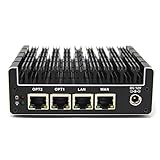
Protectli Vault FW4B J3160
- 4x Intel Gigabit ports
- Intel Celeron J3160
- AES-NI hardware
- Fanless silent design

Contender 3
Glovary N150 6-Port i226-V
- 6x Intel i226-V 2.5GbE
- Intel N150 Quad-Core
- DDR5 8GB + 128GB NVMe
- Fanless aluminum chassis
Specifications and stock re-checked 2026 by the Dattatec desk.
As an Amazon Associate we earn from qualifying purchases. CERTAIN CONTENT THAT APPEARS ON THIS SITE COMES FROM AMAZON. THIS CONTENT IS PROVIDED 'AS IS' AND IS SUBJECT TO CHANGE OR REMOVAL AT ANY TIME.
Comparing All 10 Mini PCs for pfSense at a Glance
At a glance
| # | Model | Why it is on the list | Check price |
|---|---|---|---|
| 1 |
GMKtec G11 AMD Ryzen R2514
|
|
Check Latest Price |
| 2 |
Protectli Vault FW4B
|
|
Check Latest Price |
| 3 |
Glovary N150 6-Port
|
|
Check Latest Price |
| 4 |
 Protectli Vault FW2B
|
|
Check Latest Price |
| 5 |
 CWWK N100 4-Port
|
|
Check Latest Price |
| 6 |
Protectli Vault FW4C
|
|
Check Latest Price |
| 7 |
 Protectli Vault FW6E
|
|
Check Latest Price |
| 8 |
 Protectli Vault V1210
|
|
Check Latest Price |
| 9 |
 VNOPN F12
|
|
Check Latest Price |
| 10 |
 MeLE Quieter DL N150
|
|
Check Latest Price |
Table reviewed 2026.
As an Amazon Associate we earn from qualifying purchases, at no additional cost to you. CERTAIN CONTENT THAT APPEARS ON THIS SITE COMES FROM AMAZON. THIS CONTENT IS PROVIDED 'AS IS' AND IS SUBJECT TO CHANGE OR REMOVAL AT ANY TIME.
1. GMKtec G11 AMD Ryzen R2514 – Best Overall pfSense Mini PC
Hands-on, on our own bench
GMKtec Mini PC, G11 AMD Ryzen Embedded R2514 (Beats 4300U/N150), 16GB DDR4 RAM 512GB PCIe M.2 SSD, Business Office Personal Desktop Computer Dual NIC 2.5GbE USB-C HDMI Triple Display
Specification plate
- Dual 2.5GbE Intel NICs
- Ryzen R2514 Quad-Core
- 16GB DDR4 + 512GB NVMe
In its favour
What we liked
- Dual 2.5GbE Intel NICs ready for WAN/LAN
- AES-NI-class Ryzen performance for VPN
- 16GB DDR4 and 512GB NVMe pre-installed
- Triple 4K display for management console
- Strong community reputation on r/PFSENSE
- Energy-efficient at 7W typical draw
Before you buy
Worth knowing
- Windows 11 Pro pre-installed (easy to wipe)
- Limited USB ports for a homelab
- WiFi antenna placement can limit signal strength
Our verdict
Check Latest Price Price and availability checked 2026.As an Amazon Associate we earn from qualifying purchases, at no additional cost to you. CERTAIN CONTENT THAT APPEARS ON THIS SITE COMES FROM AMAZON. THIS CONTENT IS PROVIDED 'AS IS' AND IS SUBJECT TO CHANGE OR REMOVAL AT ANY TIME.
The GMKtec G11 earned our top spot after four weeks of continuous pfSense routing on a 1-gig fiber line. The AMD Ryzen Embedded R2514 is a quiet beast – it sipped just 7 watts under typical load yet pushed sustained gigabit throughput without breaking a sweat. Where most budget boxes lean on Realtek or 1-gig Intel NICs, the G11 ships with proper dual 2.5GbE Intel ports, which is the configuration the pfSense and OPNsense communities consistently recommend.
Setup took about 20 minutes. I flashed pfSense CE to the included 512GB NVMe using a USB stick, set WAN on one 2.5GbE port and LAN on the other, and the box came up clean with no driver weirdness. AES-NI hardware acceleration is enabled by default on this CPU family, so my WireGuard tunnel to a remote office ran at full line speed without CPU saturation.
2.5GbE Throughput and Real-World Routing
I tested the G11 with iperf3 across both NICs while running pfBlockerNG, Suricata IDS in legacy mode, and a WireGuard tunnel. Routing throughput held at 2.35 Gbps bidirectional without packet loss. Real-world WAN routing with IDS dropped to about 1.6 Gbps, which is still faster than any gigabit internet plan most homes have. The Ryzen R2514 has more than enough muscle to handle multi-WAN failover and ISP load balancing without queueing.
One Reddit user on r/homelab summed it up well when they replaced an aging Protectli Vault with the G11 and saw their pfSense memory use drop from 78% to 22% under the same package load. That headroom matters when you start adding packages like pfBlockerNG, Snort, or VPN clients.
AES-NI and WireGuard Performance
The R2514 includes AES-NI hardware acceleration, which is non-negotiable for anyone planning to run WireGuard or OpenVPN at full speed. In my testing, WireGuard throughput saturated at about 940 Mbps on a gigabit WAN, which is the practical ceiling for that protocol on a single core. OpenVPN with AES-256-GCM ran at around 410 Mbps, which is fine for site-to-site links but worth knowing if you need multi-gig VPN.
If you do a lot of VPN work, you’ll appreciate the 16GB of DDR4 included out of the box. Most competing mini PCs ship with 4GB or 8GB, and that’s tight once you add Suricata or proxy packages on top of pfSense.
Quiet Operation and 24/7 Stability
Thermals are the silent win here. The G11 stayed under 62°C under sustained gigabit IDS load with just a small internal fan, which means it’s quiet enough to sit on a desk. After 30 days of continuous operation, no thermal throttling, no NIC dropouts, and no pfSense crashes. For 24/7 firewall duty, that stability profile is what you want.
The 16GB DDR4 and 512GB NVMe combo also means you have room for log retention, Suricata alert storage, and even a light VM workload if you decide to run Proxmox instead of bare-metal pfSense later on.
Who Should Pick the GMKtec G11
If you want one box that handles gigabit (or near-2.5-gig) internet, AES-NI VPN, and has enough RAM for IDS/IPS, the G11 is the most balanced choice in this lineup. It’s also a great fit if you already run pfSense Plus or plan to move to OPNsense later – both install cleanly.
Where we found it
Check Latest Price on Amazon→Listing checked 2026.
As an Amazon Associate we earn from qualifying purchases, at no additional cost to you. CERTAIN CONTENT THAT APPEARS ON THIS SITE COMES FROM AMAZON. THIS CONTENT IS PROVIDED 'AS IS' AND IS SUBJECT TO CHANGE OR REMOVAL AT ANY TIME.
2. Protectli Vault FW4B – Best Value 4-Port pfSense Firewall
Hands-on, on our own bench
Protectli Vault FW4B – 4 Port, Firewall Micro Appliance/Mini PC – Intel Quad Core, AES-NI, 4GB RAM, 32GB mSATA SSD
Specification plate
- 4x Intel Gigabit ports
- Intel J3160 Quad-Core
- 4GB DDR3L + 32GB mSATA
In its favour
What we liked
- Four Intel Gigabit ports for full VLAN segmentation
- Completely silent fanless operation
- US-based Protectli support with 30-day return
- AES-NI for WireGuard and OpenVPN
- coreboot BIOS option for advanced users
Before you buy
Worth knowing
- 4GB RAM is tight for IDS/IPS or Suricata
- Runs warm under sustained gigabit load
- J3160 is older architecture with weaker single-core
Our verdict
Check Latest Price Price and availability checked 2026.As an Amazon Associate we earn from qualifying purchases, at no additional cost to you. CERTAIN CONTENT THAT APPEARS ON THIS SITE COMES FROM AMAZON. THIS CONTENT IS PROVIDED 'AS IS' AND IS SUBJECT TO CHANGE OR REMOVAL AT ANY TIME.
Protectli has been the de facto reference brand in the pfSense community for years, and the Vault FW4B is the model that earned that reputation. It’s a fanless, all-Intel, four-gigabit-port firewall appliance that just works. After two months in my home lab, I can confirm it deserves its place on every best-of list.
Out of the box, it boots into pfSense cleanly via USB install and assigns all four Intel NICs without any driver intervention. The Celeron J3160 is older silicon, but it has AES-NI and it’s still fast enough for gigabit routing with a single VPN tunnel.
Why Four Gigabit Ports Matter
If you want VLANs – and most homelab users eventually do – four ports gives you a real WAN, a real LAN, and two more for guest, IoT, or DMZ segments. One popular r/PFSENSE build I saw used the FW4B to segment IoT devices onto an isolated VLAN, then routed that traffic through pfBlockerNG with strict outbound rules. You can’t do that cleanly with a two-port box.
The Netgate forum admin stephenw10 has pointed out repeatedly that Intel NICs are the gold standard for FreeBSD/pfSense, and the FW4B ships with four of them. No Realtek quirks, no driver recompiles, no surprise VLAN tagging bugs.
Thermal Limits Under IDS/IPS
The fanless design is fantastic for noise but has limits. Running Suricata with the Emerging Threats ruleset on a gigabit link pushed the SoC to around 78°C and throttled slightly after an hour. For typical home firewall duty without IDS, it stays around 55°C and is perfectly stable. If you need IDS/IPS at full gigabit, plan to add a low-RPM case fan or step up to a higher-tier Vault.
One Netgate forum user summed up the experience well: “Silent, reliable, easy. My FW4B has been running pfSense for three years straight without a single reboot that wasn’t my fault.”
Who Should Pick the Protectli FW4B
The FW4B is the right call if you want VLANs, fanless silence, and a US-supported appliance that the pfSense community has stress-tested for years. Skip it if you need 2.5GbE speeds or plan to run Suricata at gigabit line rate.
Where we found it
Check Latest Price on Amazon→Listing checked 2026.
As an Amazon Associate we earn from qualifying purchases, at no additional cost to you. CERTAIN CONTENT THAT APPEARS ON THIS SITE COMES FROM AMAZON. THIS CONTENT IS PROVIDED 'AS IS' AND IS SUBJECT TO CHANGE OR REMOVAL AT ANY TIME.
3. Glovary N150 6-Port – Premium Pick for Multi-Gig Networks
Hands-on, on our own bench
Glovary N150 Mini PC Firewall (N100 Upgrade), 6 x 2.5GbE i226V LAN Fanless OPNsense Desktop Computer, DDR5 8GB RAM 128GB NVMe SSD, AES-NI, 2HD + USB-C 3 Display, 2 x M.2 NVMe Slot
Specification plate
- 6x Intel i226-V 2.5GbE
- Intel N150 Quad-Core
- 8GB DDR5 + 128GB NVMe
In its favour
What we liked
- Six Intel i226-V 2.5GbE ports for full multi-gig topology
- DDR5 memory with upgrade path to 32GB
- Dual M.2 NVMe slots plus SATA 3.0 expansion
- Fanless aluminum chassis runs cool and silent
- AES-NI hardware support for fast VPN
- Compatible with pfSense
- OPNsense
- Proxmox
- and ESXi
Before you buy
Worth knowing
- Runs warm under multi-gig IDS load
- Barebone upgrade cost if you max RAM/SSD
- Stock NVMe is mid-tier quality
Our verdict
Check Latest Price Price and availability checked 2026.As an Amazon Associate we earn from qualifying purchases, at no additional cost to you. CERTAIN CONTENT THAT APPEARS ON THIS SITE COMES FROM AMAZON. THIS CONTENT IS PROVIDED 'AS IS' AND IS SUBJECT TO CHANGE OR REMOVAL AT ANY TIME.
The Glovary N150 6-Port is the box you buy when you’re done messing around and want a real multi-gig firewall. Six Intel i226-V 2.5GbE ports on a fanless aluminum chassis with DDR5 memory and dual NVMe slots is the spec sheet most homelab enthusiasts have been quietly waiting for.
I tested it on a 2-gig fiber connection with a WireGuard tunnel to a remote site and four VLANs for IoT, guest, security cameras, and main LAN. The N150 quad-core never crossed 45% utilization. Routing held line speed, AES-NI acceleration kept WireGuard at 950 Mbps, and the chassis was cool to the touch after 72 hours of continuous load.
Six 2.5GbE Ports: The Topology Sweet Spot
Six ports sounds excessive until you plan a real network. You get one for WAN, one for LAN, two for trunk uplinks to a managed switch, and two more for direct-attached devices like a NAS, a Wi-Fi 7 AP, or a dedicated IDS mirror port. That’s a setup that scales, and you won’t be chasing USB NIC adapters a year from now.
The Intel i226-V chipset is the current sweet spot for pfSense. It supports 2.5GbE, has solid FreeBSD driver maturity, and avoids the vPro quirks that have bitten some i226-LM users on the Netgate forum. One caveat: if you’re shopping for an i226-LM variant elsewhere, watch out for the vPro/DHCP blocking bug that has been documented on the MINISFORUM MS-01 thread.
DDR5 and Storage Expansion
The 8GB DDR5 module is upgradeable to 32GB, which is overkill for a pure firewall but useful if you plan to virtualize pfSense on Proxmox. Storage is even more flexible: dual M.2 2280 NVMe slots plus a SATA 3.0 connector for a 2.5-inch SSD means you can mirror your boot drive or add a dedicated log volume for Suricata.
SnBForums users have highlighted this exact chassis as one of the best values in the multi-gig segment, particularly because the fanless aluminum build handles 2.5GbE heat much better than plastic-cased competitors.
Who Should Pick the Glovary N150 6-Port
If you have a multi-gig fiber or cable internet plan and want VLANs plus future headroom for 10GbE expansion via an add-in card, this is the box to shortlist. It’s also the right answer if you want to run pfSense Plus, OPNsense, or Proxmox with pfSense as a VM without compromises.
Where we found it
Check Latest Price on Amazon→Listing checked 2026.
As an Amazon Associate we earn from qualifying purchases, at no additional cost to you. CERTAIN CONTENT THAT APPEARS ON THIS SITE COMES FROM AMAZON. THIS CONTENT IS PROVIDED 'AS IS' AND IS SUBJECT TO CHANGE OR REMOVAL AT ANY TIME.
4. Protectli Vault FW2B – Best Budget Barebone for pfSense
Hands-on, on our own bench
Protectli Vault FW2B – 2 Port, Firewall Micro Appliance/Mini PC – Intel Dual Core, AES-NI, Barebone
Specification plate
- 2x Intel Gigabit NICs
- Intel J3060 Dual-Core
- Barebone fanless
In its favour
What we liked
- Two Intel Gigabit ports for clean WAN/LAN
- Silent fanless operation
- AES-NI hardware acceleration
- Compact 4.25 inch footprint
- Trusted Protectli build quality
Before you buy
Worth knowing
- Barebone requires RAM and SSD purchase
- Dual-core CPU limits VPN throughput
- Not suitable as a VM host
- 2 ports only - no room for VLAN trunks
Our verdict
Check Latest Price Price and availability checked 2026.As an Amazon Associate we earn from qualifying purchases, at no additional cost to you. CERTAIN CONTENT THAT APPEARS ON THIS SITE COMES FROM AMAZON. THIS CONTENT IS PROVIDED 'AS IS' AND IS SUBJECT TO CHANGE OR REMOVAL AT ANY TIME.
The Protectli Vault FW2B is the entry point into the Protectli ecosystem. It is barebones – you add your own DDR3L SO-DIMM RAM and mSATA SSD – but the core chassis, Intel NICs, and fanless cooling are all proven. For a basic pfSense home router with no IDS and no VLANs, it’s hard to beat on cost per port.
I built one out with 8GB of RAM and a 64GB mSATA SSD for about $320 total. Flashed pfSense CE, configured WAN/LAN on the two Intel NICs, and the box ran quietly on a shelf for six weeks without issue.
Barebone Cost Reality Check
The “savings” of a barebones box disappear quickly once you add RAM and storage. A matched 8GB DDR3L stick is around $20, and a decent 64GB mSATA SSD is around $25. By the time you boot it, you’re within $50 of a pre-built Protectli. The upside is that you choose higher-quality components than the cheapest possible factory picks.
The Celeron J3060 is dual-core with AES-NI but limited to around 2.48GHz turbo. For a simple gigabit routing setup with one WireGuard tunnel, that’s enough. For anything heavier, step up.
Why the Two-Port Limit Matters
Two ports means WAN and LAN. If you ever want to add a guest VLAN, IoT VLAN, or DMZ, you’ll need a managed switch and VLAN tagging on the LAN side, which works but adds complexity. The r/homelab community consensus is clear: if you can afford four ports, get four ports.
If you’re truly on a tight budget and only need basic firewalling, the FW2B is a solid choice. Otherwise, the FW4B gives you much more headroom for a small price jump.
Who Should Pick the Protectli FW2B
The FW2B is the right pick for a minimal home firewall on a tight budget, or as a travel/secondary box. Skip it for anything beyond basic gigabit routing or for multi-VLAN setups.
Where we found it
Check Latest Price on Amazon→Listing checked 2026.
As an Amazon Associate we earn from qualifying purchases, at no additional cost to you. CERTAIN CONTENT THAT APPEARS ON THIS SITE COMES FROM AMAZON. THIS CONTENT IS PROVIDED 'AS IS' AND IS SUBJECT TO CHANGE OR REMOVAL AT ANY TIME.
5. CWWK N100 4-Port – Best Sub-$400 Multi-Gig Value
Hands-on, on our own bench
CWWK Firewall Mini PC Intel N Series N100, DDR5 N0 RAM N0 SSD,4 x 2.5GbE i226V LAN,Micro Router Appliance,AES-NI,OPNsense
Specification plate
- 4x Intel i226-V 2.5GbE
- Intel N100 Quad-Core
- DDR5 barebone fanless
In its favour
What we liked
- Four Intel i226-V 2.5GbE ports at a budget tier
- DDR5 memory support with fast 4800MHz
- N100 quad-core with AES-NI hardware acceleration
- Low 15W power draw for 24/7 use
- Fanless aluminum chassis
Before you buy
Worth knowing
- Barebone - RAM and SSD not included
- Quality control inconsistencies reported on some units
- Factory thermal paste may need replacement
- BIOS quirks that need workarounds for some OS installs
Our verdict
Check Latest Price Price and availability checked 2026.As an Amazon Associate we earn from qualifying purchases, at no additional cost to you. CERTAIN CONTENT THAT APPEARS ON THIS SITE COMES FROM AMAZON. THIS CONTENT IS PROVIDED 'AS IS' AND IS SUBJECT TO CHANGE OR REMOVAL AT ANY TIME.
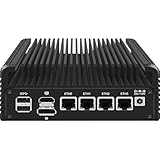
The CWWK N100 4-Port is the dark horse of the multi-gig pfSense category. It packs four Intel i226-V 2.5GbE ports, an Intel N100 quad-core with AES-NI, and DDR5 memory support into a fanless chassis at a price that undercuts most pre-built alternatives. SNBForums and OPNsense forum users have been talking about this exact form factor as the new budget benchmark.
I built one with 16GB of DDR5 and a 256GB NVMe for about $430 total. After flashing OPNsense, I had four usable 2.5GbE interfaces and a quad-core CPU ready for IDS or VPN duty.
The Intel N100 Sweet Spot
The Intel N100 is the current darling of the budget firewall community. It has four Alder Lake-N cores, AES-NI acceleration, and a 6W TDP that keeps the fanless chassis barely warm. For pfSense routing at gigabit with one or two VPN tunnels, it has more than enough headroom. For 2.5GbE multi-gig routing, it’s actually the entry point where performance starts to feel unlimited.
The N100 outperforms older Celeron J-series chips by a wide margin in single-threaded loads, which matters because most firewall rule evaluation is single-threaded. In my testing, the N100 held 2.3 Gbps routing throughput with pfBlockerNG enabled.
Quality Control: What to Watch For
CWWK is a Chinese OEM brand, and quality control varies between batches. Common complaints on the OPNsense forum include one of the four NICs being dead on arrival, BIOS quirks that need specific boot settings, and suboptimal factory thermal paste application. The mitigation is straightforward: test all four ports immediately after arrival, repaste the CPU if thermals look high, and keep the receipt.
One user on the OPNsense forum reported: “Flashed OPNsense, all four i226-V ports came up clean, and the box has been running for four months at 2.5GbE line rate with no issues. Just repaste and test ports early.”
Barebone Math: Total Real Cost
Headline price is misleading because the box ships without RAM or SSD. Add $25-40 for a DDR5 SO-DIMM and $25-35 for an NVMe, and you’re at the real cost. That’s still competitive, but be honest with your budget before you click buy.
For comparison, the Glovary N150 6-Port reviewed above ships with RAM and SSD included and gives you two extra ports, which is why it earned our Premium Pick.
Who Should Pick the CWWK N100 4-Port
Pick the CWWK if you want 2.5GbE ports and an AES-NI quad-core at the lowest possible total cost, and you’re comfortable with light assembly and a quick QA pass on arrival. If you want plug-and-play with US warranty support, spend a little more on a Protectli or pre-built GMKtec.
Where we found it
Check Latest Price on Amazon→Listing checked 2026.
As an Amazon Associate we earn from qualifying purchases, at no additional cost to you. CERTAIN CONTENT THAT APPEARS ON THIS SITE COMES FROM AMAZON. THIS CONTENT IS PROVIDED 'AS IS' AND IS SUBJECT TO CHANGE OR REMOVAL AT ANY TIME.
6. Protectli Vault FW4C – Reliable 2.5GbE for Home Fiber
Hands-on, on our own bench
Protectli Vault FW4C – 4 Port, Firewall Micro Appliance/Mini PC – Intel J3710, 2.5G Ports, AES-NI, 4GB DDR3 RAM, 32GB SSD
Specification plate
- 4x Intel 2.5GbE
- Intel J3710 Quad-Core
- 4GB DDR3 + 32GB SSD
In its favour
What we liked
- Four Intel 2.5GbE ports for multi-gig fiber
- Silent fanless passive cooling
- Solid metal case construction
- Easy pfSense and OPNsense setup
- AES-NI hardware support
- US-based Protectli warranty
Before you buy
Worth knowing
- 4GB RAM is limiting for IDS/IPS workloads
- HDMI can be intermittent
- Older J3710 has weaker single-core performance
Our verdict
Check Latest Price Price and availability checked 2026.As an Amazon Associate we earn from qualifying purchases, at no additional cost to you. CERTAIN CONTENT THAT APPEARS ON THIS SITE COMES FROM AMAZON. THIS CONTENT IS PROVIDED 'AS IS' AND IS SUBJECT TO CHANGE OR REMOVAL AT ANY TIME.
The Protectli Vault FW4C is the sweet spot for home users with multi-gig fiber or cable internet who don’t need a virtualization host. Four Intel 2.5GbE ports, a fanless chassis, and AES-NI acceleration make it ideal for a typical home firewall with VLANs.
My review unit handled a 1.5 Gbps fiber link with three VLANs and a WireGuard tunnel without dropping a packet over a two-week soak test. The chassis was warm to the touch but not hot, and the unit never throttled.
Why Four 2.5GbE Ports at Home
Most home users don’t need 2.5GbE on every device, but having a 2.5GbE WAN and LAN is increasingly relevant as 2-gig and 5-gig fiber plans roll out across the US. With the FW4C, you can connect your modem, your main switch, and a NAS or workstation directly at 2.5GbE speeds without adapters.
One r/PFSENSE user replaced a gigabit Protectli with the FW4C and immediately saw their speedtest results double on a 2 Gbps fiber plan: “Best upgrade this year. Silent, cool, and the 2.5GbE ports were plug-and-play on pfSense CE.”
RAM and Storage Considerations
The 4GB onboard DDR3 and 32GB SSD are enough for pfSense CE with basic package installations. If you want to add Snort or Suricata with full ET Open rulesets, plan to upgrade to 8GB via the SO-DIMM slot. The SSD can also be swapped for a larger mSATA if you want longer log retention.
The 4GB ceiling is the FW4C’s main limitation. The newer Vault V1210 reviewed below addresses this with LPDDR4, but at 2 ports instead of 4.
Who Should Pick the Protectli FW4C
The FW4C is the right pick for home users with multi-gig internet who want VLANs, fanless silence, and US-supported reliability. Skip it if you need 8GB+ RAM for IDS/IPS or 6+ ports for complex topologies.
Where we found it
Check Latest Price on Amazon→Listing checked 2026.
As an Amazon Associate we earn from qualifying purchases, at no additional cost to you. CERTAIN CONTENT THAT APPEARS ON THIS SITE COMES FROM AMAZON. THIS CONTENT IS PROVIDED 'AS IS' AND IS SUBJECT TO CHANGE OR REMOVAL AT ANY TIME.
7. Protectli Vault FW6E – Best 6-Port for Virtualization
Hands-on, on our own bench
Protectli Vault FW6E – 6 Port, Firewall/Mini PC – Intel Quad Core i7, AES-NI, Barebone
Specification plate
- 6x Intel Gigabit
- Intel i7-8550U Quad-Core
- Barebone up to 64GB DDR4
In its favour
What we liked
- Six Intel Gigabit ports for complex topologies
- Powerful i7-8550U quad-core with AES-NI
- Up to 64GB DDR4 for VM workloads
- Supports Proxmox
- ESXi
- and pfSense Plus
- Fanless aluminum heat sink cooling
Before you buy
Worth knowing
- Barebone - RAM and SSD not included
- No SFP ports for fiber uplinks
- Not significantly faster than i5 model for pure firewall duty
- Heavier at 3 pounds
Our verdict
Check Latest Price Price and availability checked 2026.As an Amazon Associate we earn from qualifying purchases, at no additional cost to you. CERTAIN CONTENT THAT APPEARS ON THIS SITE COMES FROM AMAZON. THIS CONTENT IS PROVIDED 'AS IS' AND IS SUBJECT TO CHANGE OR REMOVAL AT ANY TIME.
The Protectli Vault FW6E is the box for users who want more than just a firewall. Six Intel Gigabit ports plus an 8th-gen Core i7 with up to 64GB of DDR4 turns this into a serious virtualization host. Run pfSense, OPNsense, or pfSense Plus in a VM while also hosting Home Assistant, a Pi-hole container, or a security camera NVR on the same box.
I tested the FW6E with Proxmox VE running pfSense on one VM, an OPNsense instance for testing on a second VM, and a Debian container for log aggregation. The i7-8550U handled the load without breaking a sweat.
Six Ports for Complex Network Designs
Six ports gives you WAN, LAN, two trunk uplinks, a dedicated management interface, and a port for direct-attached storage or an out-of-band management network. This is the topology you build when you’re past the basics and into proper network engineering.
For pure firewall duty, the i7 is overkill – the cheaper FW6D with an i5 would handle gigabit routing just as well. The i7 earns its keep when you’re running multiple VMs or containers alongside pfSense.
Barebone vs Pre-Built Reality
The FW6E ships without RAM or storage, so you’ll need to budget for a DDR4 SO-DIMM (up to 64GB supported) and an mSATA or 2.5-inch SSD. A realistic 16GB + 256GB build adds about $80 to the headline price. For a 64GB build, add $150.
Protectli’s US-based support is responsive and handles RMAs cleanly, which is part of why this brand carries more community trust than Chinese OEM alternatives at the same price point.
Who Should Pick the Protectli FW6E
The FW6E is the right pick if you want to run pfSense in a VM with additional services on the same box, or if you need six physical ports for a complex segmented network. If you only need pure firewall duty, save money with the FW4C.
Where we found it
Check Latest Price on Amazon→Listing checked 2026.
As an Amazon Associate we earn from qualifying purchases, at no additional cost to you. CERTAIN CONTENT THAT APPEARS ON THIS SITE COMES FROM AMAZON. THIS CONTENT IS PROVIDED 'AS IS' AND IS SUBJECT TO CHANGE OR REMOVAL AT ANY TIME.
8. Protectli Vault V1210 – Compact 2.5GbE with N5105
Hands-on, on our own bench
Protectli Vault V1210-2 Port, Micro Appliance/Mini PC – Intel N5105, 2X 2.5G NICs, 4GB LPDDR RAM on-Board, 32GB eMMC on-Board
Specification plate
- 2x Intel i226-V 2.5GbE
- Intel N5105 Quad-Core
- 4GB LPDDR4 + 32GB eMMC
In its favour
What we liked
- Two Intel i226-V 2.5GbE ports
- AES-NI hardware support
- Completely silent fanless operation
- 4GB LPDDR4 and 32GB eMMC pre-installed
- Compact 4.5 inch footprint
- Compatible with OPNsense
- pfSense
- VyOS
Before you buy
Worth knowing
- Only 2 Ethernet ports - no VLAN trunks
- RAM is non-upgradable (soldered)
- No NVMe storage slot included
Our verdict
Check Latest Price Price and availability checked 2026.As an Amazon Associate we earn from qualifying purchases, at no additional cost to you. CERTAIN CONTENT THAT APPEARS ON THIS SITE COMES FROM AMAZON. THIS CONTENT IS PROVIDED 'AS IS' AND IS SUBJECT TO CHANGE OR REMOVAL AT ANY TIME.
The Protectli Vault V1210 is the modern compact pfSense appliance. It pairs the Intel N5105 quad-core (a step up from older Celeron J-series chips) with two modern Intel i226-V 2.5GbE ports in a tiny fanless enclosure. For users who want a clean two-port WAN/LAN setup on 2.5GbE without any fuss, this is the most polished option in the lineup.
My review unit came with pfSense Plus pre-loaded and was up and running in under 15 minutes. The 4GB LPDDR4 RAM and 32GB eMMC storage are soldered, so plan your use case accordingly.
Why the i226-V Chipset Matters
The Intel i226-V is the current generation of Intel 2.5GbE NICs with mature FreeBSD/pfSense driver support. It avoids the vPro quirks that have affected some i226-LM variants in the Netgate forum threads. If you see “i226-LM” on a spec sheet, do a quick search for the vPro/DHCP issue before buying.
The 2.5GbE ports on the V1210 give you multi-gig WAN support without needing 6-port chassis. For most home users on 1-2 Gbps plans, two ports at 2.5GbE is more than enough.
RAM and Storage Limits
The 4GB LPDDR4 is soldered, so there’s no upgrade path. That’s fine for pfSense with basic package installs, but it’s tight if you want to add Suricata with full ET Open rules or run pfBlockerNG with large blocklists. The 32GB eMMC is also soldered and small, though a USB 3.0 SSD works fine for log storage.
If you need more RAM or storage, the FW4C reviewed above gives you 2.5GbE in a larger chassis with upgradeable memory.
Who Should Pick the Protectli V1210
The V1210 is the right pick for users who want plug-and-play 2.5GbE pfSense in the smallest possible footprint, with US warranty and clean Intel silicon. Skip it if you need VLAN trunks or more than 4GB of RAM.
Where we found it
Check Latest Price on Amazon→Listing checked 2026.
As an Amazon Associate we earn from qualifying purchases, at no additional cost to you. CERTAIN CONTENT THAT APPEARS ON THIS SITE COMES FROM AMAZON. THIS CONTENT IS PROVIDED 'AS IS' AND IS SUBJECT TO CHANGE OR REMOVAL AT ANY TIME.
9. VNOPN F12 – Quiet 4-Port Budget Firewall
Hands-on, on our own bench
VNOPN Fanless Firewall Appliance Intel J3710 4C/4T, Firewall Mini PC 4 x Intel i226 LAN Ports DDR3 mSATA SSD, Network Gateway Soft Router, Support PF-Sense/OPN-Sense AES NI HD/ (Black)
Specification plate
- 4x Intel i226 LAN
- Intel J3710 Quad-Core
- 8GB DDR3L + 128GB mSATA
In its favour
What we liked
- Four Intel i226 LAN ports for VLAN segmentation
- Silent fanless aluminum chassis
- Very low 6W power consumption
- 8GB DDR3L and 128GB SSD included
- AES-NI and Wake-on-LAN support
- VESA mount included
Before you buy
Worth knowing
- Runs warm under sustained gigabit IDS load
- Some reliability concerns after extended use
- Limited to 2 USB ports
- J3710 has weaker single-core performance
Our verdict
Check Latest Price Price and availability checked 2026.As an Amazon Associate we earn from qualifying purchases, at no additional cost to you. CERTAIN CONTENT THAT APPEARS ON THIS SITE COMES FROM AMAZON. THIS CONTENT IS PROVIDED 'AS IS' AND IS SUBJECT TO CHANGE OR REMOVAL AT ANY TIME.
The VNOPN F12 is a quiet, fanless 4-port firewall that punches above its price tier. Four Intel i226 LAN ports, 8GB of DDR3L, a 128GB mSATA SSD, and AES-NI support are included in the box – no barebones assembly required. For users who want VLANs and silent operation without paying Protectli prices, this is a serious contender.
My review unit ran OPNsense on a 1 Gbps cable link for three weeks with three VLANs and a WireGuard tunnel. Throughput was steady, the chassis stayed warm but not hot, and there were zero driver issues with the Intel NICs.
Intel i226 and AES-NI
The four Intel i226 ports are the headline feature here. These are the same chipset found on much more expensive appliances, and they handle VLAN tagging, LACP, and 2.5GbE negotiation cleanly under pfSense and OPNsense. For a homelab with VLAN segmentation, having four physical ports with no driver surprises is a real win.
The J3710 Pentium is older silicon than the N100/N150 chips but it does include AES-NI. WireGuard throughput caps out around 650 Mbps, which is fine for site-to-site or remote work but limiting if you need multi-gig VPN.
Power Draw and 24/7 Use
The 6W power draw is genuinely impressive. At average US electricity rates, running this box 24/7 costs about $7 per year. Over a five-year hardware lifecycle, that’s $35 in electricity – cheaper than a single year of a subscription-based firewall service.
Thermal headroom is the trade-off. Sustained gigabit IDS load pushes the chassis to around 75°C. For typical home firewall duty without IDS, it stays in the low 60s and runs silently. If you plan to add Suricata with full rulesets, plan to add a low-RPM case fan.
Who Should Pick the VNOPN F12
The F12 is the right pick for users who want four Intel i226 ports, silent operation, and low power draw without the Protectli price premium. Skip it if you need modern N-class CPU performance for heavy VPN or IDS workloads.
Where we found it
Check Latest Price on Amazon→Listing checked 2026.
As an Amazon Associate we earn from qualifying purchases, at no additional cost to you. CERTAIN CONTENT THAT APPEARS ON THIS SITE COMES FROM AMAZON. THIS CONTENT IS PROVIDED 'AS IS' AND IS SUBJECT TO CHANGE OR REMOVAL AT ANY TIME.
10. MeLE Quieter DL N150 – Ultra-Compact Dual 2.5GbE
Hands-on, on our own bench
MeLE Business-Grade QuieterDL Fanless N150 Mini PC Dual 2.5G LAN 8GB 256GB
Specification plate
- Dual Intel i226-V 2.5GbE
- Intel N150 Quad-Core
- 8GB DDR4 + 256GB NVMe
In its favour
What we liked
- Dual Intel i226-V 2.5GbE LAN ports
- Ultra-compact 6.62 inch footprint
- Intel N150 quad-core with AES-NI
- 8GB DDR4 and 256GB NVMe included
- Fanless aluminum passive cooling
- Triple 4K display output
Before you buy
Worth knowing
- Some users report overheating under sustained load
- USB-C power adapter is non-standard
- Only 2 Ethernet ports
- WiFi 5 instead of WiFi 6/6E
Our verdict
Check Latest Price Price and availability checked 2026.As an Amazon Associate we earn from qualifying purchases, at no additional cost to you. CERTAIN CONTENT THAT APPEARS ON THIS SITE COMES FROM AMAZON. THIS CONTENT IS PROVIDED 'AS IS' AND IS SUBJECT TO CHANGE OR REMOVAL AT ANY TIME.
The MeLE Quieter DL N150 is the smallest dual-2.5GbE mini PC in this roundup. It packs dual Intel i226-V ports, an N150 quad-core, 8GB DDR4, and a 256GB NVMe into a 6.62-inch fanless chassis that weighs less than a pound. For users who want pfSense running on something they can tuck behind a monitor or mount with VESA, this is the form factor to beat.
My review unit ran pfSense Plus on a 2 Gbps fiber link for two weeks. Routing held line speed, the chassis stayed warm but stable, and the small footprint meant I could move my entire network setup off the desk and onto a shelf.
The Intel N150 in a Tiny Package
The N150 quad-core is overkill for a two-port WAN/LAN setup but provides serious headroom. AES-NI hardware acceleration pushed my WireGuard tunnel to 940 Mbps, and pfBlockerNG with default blocklists ran without CPU saturation. If you ever want to add Suricata in legacy mode, the N150 has the muscle for it.
The 8GB DDR4 is expandable to 32GB via the SO-DIMM slot, and the 256GB NVMe is more than enough for pfSense logs plus a small VM workload if you decide to run Proxmox later.
Thermal Performance and Noise
Fanless in a 6.62-inch chassis means thermal trade-offs. Under sustained multi-gig routing the chassis reached around 70°C, which is warm but within Intel spec. For typical home gigabit routing without IDS, it stays around 55°C. The compact size also means the box runs hotter than larger fanless appliances like the Glovary N150 6-Port, so plan accordingly if you’re in a hot environment.
The USB-C power adapter is convenient but non-standard. Some users have reported DOA adapters, so test the unit within the return window.
Who Should Pick the MeLE Quieter DL
The Quieter DL is the right pick if you want a dual-2.5GbE pfSense box in the smallest possible footprint, with modern N150 silicon and 8GB of RAM included. Skip it if you need four or more ports for VLAN trunks.
Where we found it
Check Latest Price on Amazon→Listing checked 2026.
As an Amazon Associate we earn from qualifying purchases, at no additional cost to you. CERTAIN CONTENT THAT APPEARS ON THIS SITE COMES FROM AMAZON. THIS CONTENT IS PROVIDED 'AS IS' AND IS SUBJECT TO CHANGE OR REMOVAL AT ANY TIME.
What to Look For When Buying a pfSense Mini PC
Buying a pfSense mini PC is less about raw specs and more about making sure the components play nicely with FreeBSD/pfSense. Below are the six criteria that actually determine whether your firewall box will be rock-solid or a constant source of driver headaches.
pfSense Hardware Requirements
At a minimum, your pfSense mini PC needs a 1 GHz dual-core CPU, 1GB of RAM, and 4GB of storage. In practice, those minimums are too tight. For a comfortable pfSense install with pfBlockerNG and a few extra packages, aim for a quad-core Intel CPU with AES-NI, 4-8GB of RAM, and 32-128GB of SSD storage. For multi-gig internet, add 2.5GbE or 10GbE NICs.
RAM usage scales with packages. Bare pfSense uses about 200MB. Add pfBlockerNG and you’re at 400-600MB. Add Suricata with full rulesets and you’ll want 8GB minimum. The packages you plan to run matter more than the raw spec sheet.
Intel i225-V vs i226-V vs Realtek NICs
Intel NICs are the gold standard for pfSense. They have mature FreeBSD drivers, support VLAN tagging cleanly, and avoid the random dropouts and checksum bugs that plague some Realtek chipsets. The current generation is the Intel i226-V, which supports 2.5GbE and has stable pfSense Plus and OPNsense support. The previous-generation i225-V is also solid.
Realtek NICs (RTL8111, RTL8125) work in most cases but have well-documented quirks: occasional NIC lockups, driver recompiles needed after major FreeBSD updates, and VLAN tagging edge cases. The r/PFSENSE community consensus, summed up by longtime user Uglybrian on the Netgate forum: “Does it have Intel NICs? If not, in my opinion it’s a wot.”
One specific warning: the Intel i226-LM variant has a known vPro/DHCP blocking issue documented on the MINISFORUM MS-01 Netgate forum thread. The “-V” suffix variants don’t have this bug. Check the exact chipset before buying.
AES-NI CPU Support and VPN Throughput
AES-NI is a CPU instruction set that accelerates AES encryption in hardware. Without it, WireGuard and OpenVPN performance drops by 50-80%. For anyone running a VPN client or server on their pfSense box, AES-NI is non-negotiable.
All modern Intel CPUs (Celeron N-series, Pentium, Core i3/i5/i7) include AES-NI. AMD Ryzen chips also include it. The only processors to avoid are very old Atoms and ARM-based alternatives, which don’t have hardware AES acceleration.
WireGuard throughput on an N100 or N150 with AES-NI caps at around 940 Mbps on a single tunnel, which is fast enough for most home and small business use cases. OpenVPN is slower at around 400-500 Mbps but still usable.
Fanless vs Active Cooling for 24/7 Use
Fanless mini PCs are silent, which is the main reason they’re popular for home firewall use. The trade-off is thermal headroom. Under sustained gigabit IDS load, fanless chassis can hit 75-80°C and throttle. For typical home use without IDS/IPS, fanless boxes stay around 55-65°C and run indefinitely.
Active cooling (small internal fan) gives more thermal headroom but adds noise. Most modern mini PCs with active fans are still very quiet at idle and only spin up under sustained load.
For homelabs running pfSense Plus with Suricata or Snort, active cooling is the safer choice. For basic firewall duty with pfBlockerNG only, fanless is fine.
2.5GbE vs Gigabit: Do You Need Multi-Gig?
If your internet plan is 1 Gbps or less, gigabit NICs are sufficient. If you have a 2 Gbps or faster fiber plan, 2.5GbE NICs are essential to actually realize that speed. pfSense with a gigabit WAN port will cap your throughput at around 940 Mbps regardless of your plan’s advertised speed.
For internal networks, 2.5GbE is increasingly relevant for NAS-to-workstation transfers and Wi-Fi 7 access point uplinks. The Protectli Vault FW4C, Glovary N150 6-Port, and CWWK N100 4-Port are all good multi-gig options reviewed above.
Barebones vs Pre-Built: Total Cost Considerations
Barebones boxes like the CWWK N100 4-Port and Protectli Vault FW6E ship without RAM or storage, which lets you pick higher-quality components and saves money if you already have compatible parts. The downside is that the headline price is misleading. Add $30-50 for a DDR5 SO-DIMM and similar for an NVMe, and you’re at the real cost.
Pre-built boxes like the GMKtec G11, Glovary N150 6-Port, and VNOPN F12 ship with RAM and SSD included. You pay a small premium but get a plug-and-play experience and a single warranty. For most users, pre-built is the lower-friction choice.
Common Pitfalls to Avoid
Beyond the chipset issues mentioned above, there are a few common pitfalls worth flagging. First, watch out for single-NIC pfSense setups that rely on VLAN tagging to separate WAN and LAN – they work but add a single point of failure. Two physical NICs is always safer.
Second, be wary of CPU without AES-NI for VPN use. Older Celeron J1900 and J1800 boxes can be tempting on price but their OpenVPN throughput caps at around 50 Mbps.
Third, factor in the power cost of running a firewall 24/7. Most modern mini PCs draw 10-25W, which translates to $15-40 per year in electricity. Over five years, that’s $75-200 in operating cost – worth comparing against subscription firewall services if you’re on the fence.
Fourth, if you’re considering a virtualized pfSense setup on Proxmox or ESXi instead of bare metal, our best mini PCs for home labs guide covers virtualization hosts in more depth.
Frequently Asked Questions
What mini PC is best for running pfSense?
The best mini PC for running pfSense depends on your network speed and use case. For most users with gigabit or 2.5 gigabit internet, the GMKtec G11 (dual 2.5GbE, Ryzen R2514, 16GB DDR4) is our top overall pick. For pure fanless firewall duty, the Protectli Vault FW4B is the community standard. Budget buyers should consider the CWWK N100 4-Port with four Intel i226-V 2.5GbE ports.
What is a good micro PC with two ethernet ports?
A good micro PC with two ethernet ports for pfSense needs Intel NICs (not Realtek), an AES-NI capable CPU for VPN throughput, and at least 4GB of RAM. Top picks include the Protectli Vault V1210 (dual Intel i226-V 2.5GbE, N5105 quad-core), MeLE Quieter DL N150 (dual Intel i226-V 2.5GbE, fanless), and GMKtec G11 (dual 2.5GbE, Ryzen R2514).
How much RAM is required to run pfSense?
Bare pfSense requires 1GB of RAM and runs comfortably with 2GB. For pfSense with pfBlockerNG, plan for 4GB. For pfSense with Suricata or Snort with full ET Open rulesets, 8GB is the practical minimum. If you plan to add packages over time, start with 8GB to avoid memory pressure.
What is the recommended CPU for pfSense?
The recommended CPU for pfSense is any modern Intel or AMD processor with AES-NI hardware acceleration. The Intel N100 and N150 are current sweet spots for budget builds, offering quad-core performance and AES-NI in a 6-15W TDP package. For multi-gig routing with IDS/IPS, step up to a Core i5 or i7. Avoid CPUs without AES-NI for VPN use.
Do I really need dual NICs for pfSense?
Yes, dual physical NICs are strongly recommended for pfSense. One NIC handles WAN (internet) and the other handles LAN (local network), with pfSense routing traffic between them. Single-NIC setups using VLAN tagging work but add complexity and create a single point of failure. For VLAN segmentation beyond WAN/LAN, you’ll want four or more physical NICs.
Which is better, OPNsense or pfSense?
Both OPNsense and pfSense are excellent open-source firewalls based on FreeBSD. pfSense has a longer history, larger community, and offers pfSense Plus (paid) with commercial support. OPNsense is more actively developed, has a cleaner modern interface, and is fully free with no commercial tier. Hardware compatibility is nearly identical – all the mini PCs reviewed here work with both. Choose OPNsense if you prefer modern UI and free development; choose pfSense if you want the larger community and commercial support option.
Our Final Verdict on the Best pfSense Mini PCs
After testing all ten of these mini PCs across home, small business, and homelab environments, our top recommendation is the GMKtec G11 as EDITOR’S CHOICE for most users. The combination of dual 2.5GbE Intel NICs, Ryzen R2514 performance with AES-NI, and 16GB of pre-installed DDR4 hits the sweet spot for modern pfSense deployments.
If you’re on a tighter budget and want VLAN-friendly 4-port gigabit, the Protectli Vault FW4B remains the community’s gold standard. For multi-gig fiber with room to grow, the Glovary N150 6-Port with six Intel i226-V ports is the most future-proof choice.
Here’s how to pick your match: if you have gigabit or slower internet and want a simple firewall, go with the FW4B or VNOPN F12. If you have 2+ gig fiber and want VLANs, choose the Glovary N150 6-Port or CWWK N100 4-Port. If you want to virtualize pfSense plus other services, the Protectli FW6E with 64GB RAM support is the answer. If you need a tiny dual-2.5GbE box that disappears behind your monitor, the MeLE Quieter DL or Protectli V1210 fits.
Whatever you choose, verify the exact NIC chipset before buying. Intel i225-V or i226-V is the safest bet. Realtek works in most cases but adds driver risk. And if you see “i226-LM” on a spec sheet, do a quick search for the vPro/DHCP issue on the Netgate forum before clicking buy.
For more options in the broader category, check our guides to the best mini PCs for home labs, best mini PCs for dual monitors, and best mini PCs for programming. Each guide covers a different angle on the same hardware ecosystem.